Meet the researchers: Álvaro Urueña
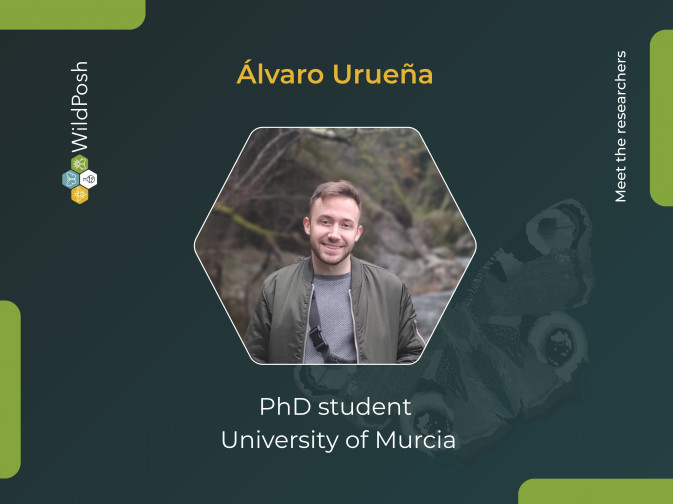
Each week, we introduce one of the early-career researchers behind the WildPosh project. Meet the young scientists working to understand and protect wild pollinators across Europe.
Álvaro Urueña is a biologist and environmental scientist with a master's degree in wildlife management, dedicated to research in the molecular biology of bees and other pollinators. He currently works as a researcher at the University of Murcia, where he is also completing his doctoral thesis. Through his work, he seeks to contribute to the development of conservation and management strategies that promote the resilience of pollinator populations and biodiversity in general.
Question: What drew you to working with wild pollinators?
Álvaro Urueña: I started out working with stingless bees, which sparked my curiosity, as I had never heard of this group of bees before. From there, I began combining my passion for molecular biology with the study of the ecology and diversity of these insects, aiming to better understand the risks they face, such as exposure to pesticides, and thereby contribute to their protection.
Q: What's the most exciting part of your work in WildPosh?
ÁU: Being able to assess the molecular response of such a wide variety of pollinator species to so many different conditions is something I still find a very stimulating challenge. Moreover, this is only possible thanks to the coordinated workflow we maintain within the project; otherwise, it would be very difficult to cover such a vast diversity of species and conditions.
Q: What's one finding or moment from your research that stood out to you?
ÁU: Something that has really struck me is how complex the effects of pesticides can be, and how much they can vary between different pollinator species. Sometimes the impacts aren't immediate or visible to the naked eye, but they still affect physiological or molecular processes that are important for pollinator survival. This highlights the importance of using integrated approaches that combine ecology, toxicology, and molecular biology.
Q: How do you hope your work in WildPosh will help protect pollinators in Europe?
ÁU: I hope our work will help improve scientific understanding of how pesticides affect wild pollinators. This information is essential for developing more realistic, evidence-based risk assessments. In the long term, the aim is for these findings to help design more sustainable agricultural strategies and support policies that reduce risks to pollinators across Europe.
Q: What's something about pollinators you wish everyone knew?
ÁU: I think something many of us who work with wild bees would like everyone to know is that honeybees aren't the only pollinators out there. There are many other species, with very different behaviours, ecology, and biology, that are just as important- or even more so - in ecological terms for our ecosystems. The honeybee may be a good umbrella species for communicating the importance of pollinators, but it's essential that society understands the true diversity that exists and the importance of protecting all these organisms. Understanding the differences between species is also key to protecting them properly and ensuring an ecosystem service as essential as pollination.
Learn more about fieldwork done by the University of Murcia last summer.