Meet the researchers: Nathan Silva
Each week, we introduce one of the early-career researchers behind the WildPosh project. Meet the young scientists working to understand and protect wild pollinators across Europe.
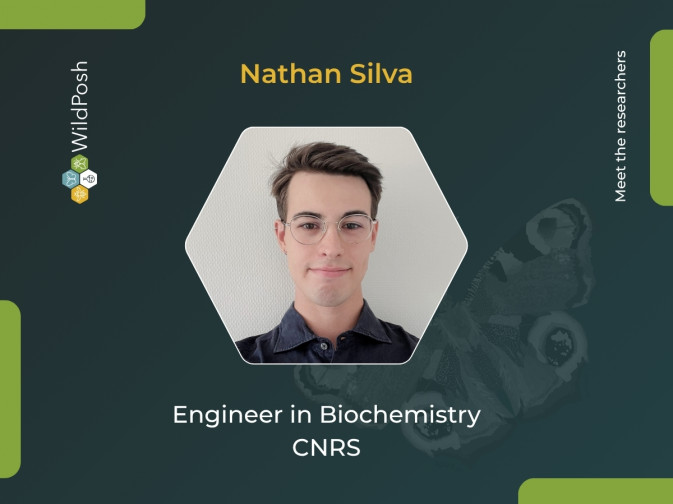
Nathan Silva is a biochemistry engineer working with WildPosh partner CNRS at the IPHC LSMBO facilities. At 24, he holds a Bachelor's in Chemistry and a Master of Science in Analytical Sciences from the University of Strasbourg. His academic interests include pollinator health, ecotoxicological studies, immunity methods and techniques, and LC-MS/MS proteomics, among others.
Question: What drew you to working with wild pollinators?
Nathan Silva: Well, it was kind of a coincidence. Originally, I was mostly specialised in environmental studies thanks to my internships. Sadly, with little professional experience, getting a first job in a specific field of study is quite tricky. One day, a friend of mine forwarded me the WildPosh job application to work at the previous WildPosh partner BioPark Archamps, supervised by Philippe Bulet, PhD. I thought it was relevant to my profile, since I had a background in analytical instruments, and the project was related to the environmental impact of pesticides. So I shot my shot, and here I am!
Q: What's the most exciting part of your work in WildPosh?
NS: In my opinion, the most exciting part is the constant learning. A year flew by, and I am still learning so much about pollinators, biological responses, pesticide exposure, ecological impact, etc. Being in a state where you constantly learn new things and where your research helps improve others' comprehension is the most interesting and exciting part of what I'm doing now.
Q: What's one finding or moment from your research that stood out to you?
NS: The lack of knowledge we currently have on pollinators other than honeybees and bumblebees. These are well-known, both on ecological and biological levels, but the others? Not so much. Sometimes there is nothing available in data banks or in the literature to base our work on - and yet these species make up the majority of pollinators in our ecosystems.
Q: How do you hope your work in WildPosh will help protect pollinators in Europe?
NS: I hope that our collaborative research within the WildPosh project will provide stronger evidence that even low levels of pesticide exposure can harm pollinators. By strengthening the scientific case, I truly hope to contribute to the development of more effective regulations on pesticide use and to encourage the transition toward safer, sustainable alternatives that better protect pollinators and our own health, across Europe.
Q: What's something about pollinators you wish everyone knew?
NS: There is so much more to pollinators than just honeybees! Butterflies, other bee species, and particularly hoverflies – all of them are important, and improving our knowledge of them allows us to discover biological processes we may not have considered before.
Check out Nathan's work on Research Gate and ORCID.