Meet the researchers: Tatiana Cardenas
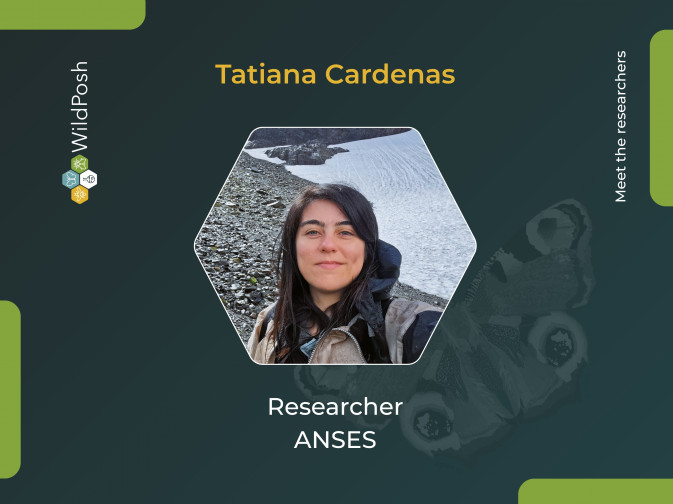
Each week, we introduce one of the early-career researchers behind the WildPosh project. Meet the young scientists working to understand and protect wild pollinators across Europe.
Tatiana Cardenas joined ANSES in April 2026 and works on WP1 of the WildPosh project. She holds a PhD in ecology from the University of Montpellier, with research spanning pollination in smallholder farming systems, honeybee and meliponini colony monitoring, and most recently, oligolectic wild bees using a trait-based approach.
Question: What drew you to working with wild pollinators?
Tatiana Cardenas: Somewhat paradoxically, working with study models of non-wild bees allowed me to carry out field research on pollination and on the diversity and ecology of bees, and thus to realise and explore the awesomeness of other bees and other pollinators.
Q: What's the most exciting part of your work in WildPosh?
TC: For me, it's the wide-ranging scale of the project, as it spans a vast biogeographic gradient and covers various contexts and landscapes where pollinators interact with a wide range of environmental conditions. What I find very exciting is exploring this complexity.
Q: What's one finding or moment from your research that stood out to you?
TC: In general, I'm fascinated by the relationship between insects and plants, but I'd say I've been particularly astonished by oligolectic bees (those that specialise in specific types of pollen) ever since I've had the chance to study them.
Q: How do you hope your work in WildPosh will help protect pollinators in Europe?
TC: For me, it's about helping to establish specific, tailored targets for the protection of wild pollinators that are consistent with their ecology and the threats they are facing, which are different from those of other species and about which much remains to be known.
Q: What's something about pollinators you wish everyone knew?
TC: That there are many, many different kinds of bees and pollinators. Beyond the number of species, wild bees and other pollinators have a wide variety of traits that contribute to the stability and resilience of ecosystems.