New paper studies the effects of repeated exposure to realistic doses of phthalates
A new study supported by WildPosh looks into the effects of repeated exposure of bumblebee workers to field-realistic doses of phthalates.
Phthalates are compounds used to increase the flexibility of plastic materials or as solvents for certain detergents and pesticides. Common phthalates such as di-2-ethylhexyl phthalate (DEHP) and di-n-butyl phthalate (DnBP) are, however, known to affect hormonal and metabolic pathways in invertebrates.
In the study, researchers investigated the impacts of repeated phthalate exposure in Bombus terrestris workers. The bumblebees were exposed to field-realistic doses of DEHP and DnBP once per week and maintained in microcolonies for 35 days. Worker mortality and the emergence of males were recorded throughout the experiment.
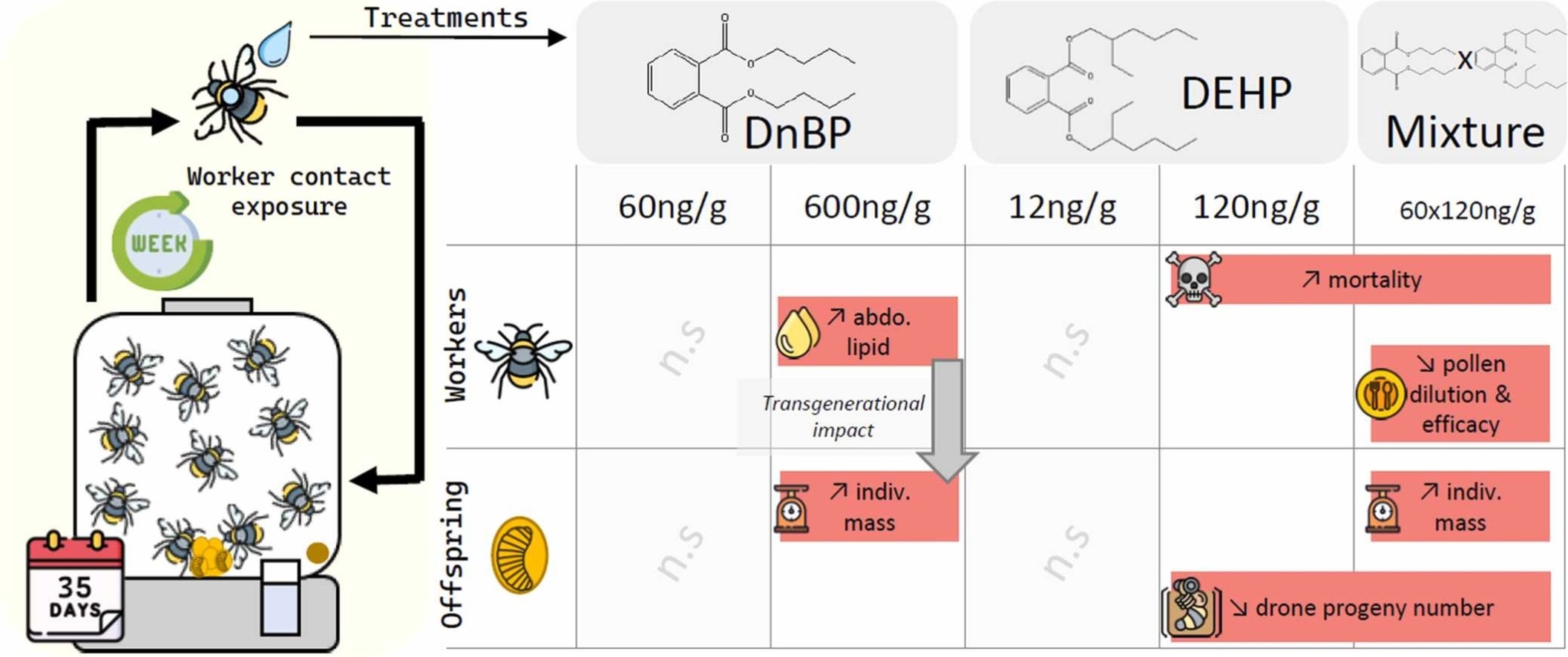
Repeated exposure to DEHP increased worker mortality by up to 50%, and a similar, marginally significant effect was seen when DEHP was combined with DnBP. Interestingly, DnBP alone did not raise worker mortality in a social setting – in contrast with earlier research, where mortality in isolated workers exposed to the same dose increased by 4 times. This suggests that living in a colony may help protect individual bees from the toxic effects of this pollutant, although the mechanism behind this is unclear.
DnBP did, however, increase workers' abdominal lipid stores, which points to a possible metabolic disruption. It was also linked to heavier offspring. The mixture of the two compounds reduced the total number of drones produced and, alongside DnBP alone, led to heavier drones among those that emerged last in the experiment. The mixture also lowered the pollen-to-syrup collection ratio and how efficiently collected pollen was converted into offspring mass.
Together, these results show that these common pollutants can have both lethal and sublethal effects on bees, even at doses considered realistic.
The authors stress that current chemical risk evaluation relies heavily on short-term toxicity tests, which might not detect the kind of delayed effects that are characteristic of endocrine disruptors like phthalates. Such overlooked effects could have long-term consequences for both individual colonies and bumblebee populations as a whole.
Read the full study.