Pesticides and pollinators: WildPosh and PollinERA research pushes for broader risk assessment
At a recent hybrid seminar hosted by the FRAM Centre at the University of Gothenburg and BECC, researchers and policymakers gathered to discuss what pesticides are doing to pollinators - and what it will take to properly assess and address that risk. The conclusion was clear: current frameworks are not keeping pace with the science.
Maj Rundlöf (Lund University) from the PollinERA project set the scene by showing that pesticide exposure is rarely a simple, single-compound problem. Pollen samples collected across eight European countries contained an average of eight different pesticide substances, with some carrying as many as 27. Wild bees, unlike honeybees, lack the large colony buffers that can absorb individual losses - and yet current EU risk assessment frameworks still rely almost exclusively on the honeybee as a stand-in for all of Europe's roughly 2,000 bee species. One field study on the neonicotinoid clothianidin found wild bee densities cut in half in treated fields, while honeybee colonies showed no measurable decline. The social resilience that makes honeybees so useful to beekeepers is also what makes them a poor model for the rest.
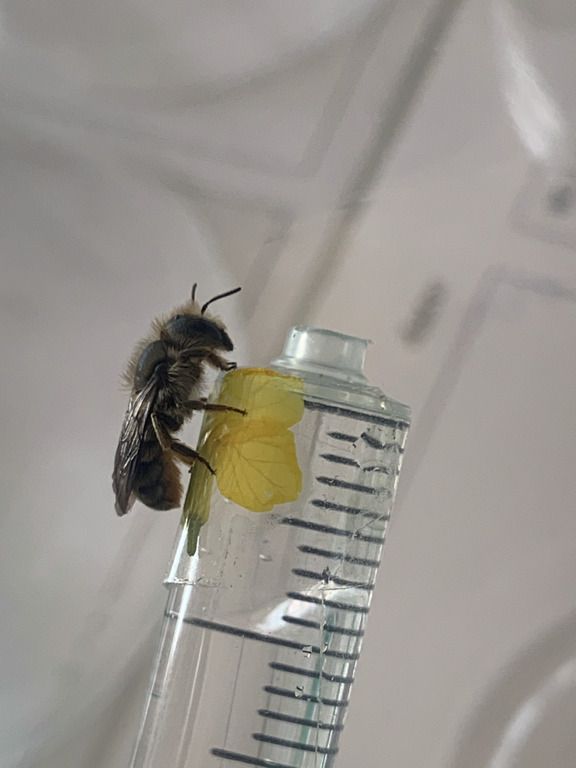 Osmia brevicornis (female) in a lab. Credit: Alicia Kling
This is the gap that WildPosh partner Julia Osterman is working to close. Her research focuses on one of the most overlooked dimensions of wild bee vulnerability: diet. Around a quarter of Sweden's native bee species are oligolectic, meaning they collect pollen from only one plant family or even a single plant species - and if that plant grows near a treated crop, these specialists have nowhere else to turn. To better understand how such species respond to pesticide exposure, Osterman is developing standardised protocols to study Osmia brevicornis, a solitary bee naturally specialised on oilseed rape, one of Europe's most widely treated crops. Working within the WildPosh project, her team is exposing both specialist and generalist solitary bee species to individual pesticides and their mixtures in laboratory and semi-field settings, generating the kind of comparable data that risk assessors currently lack.
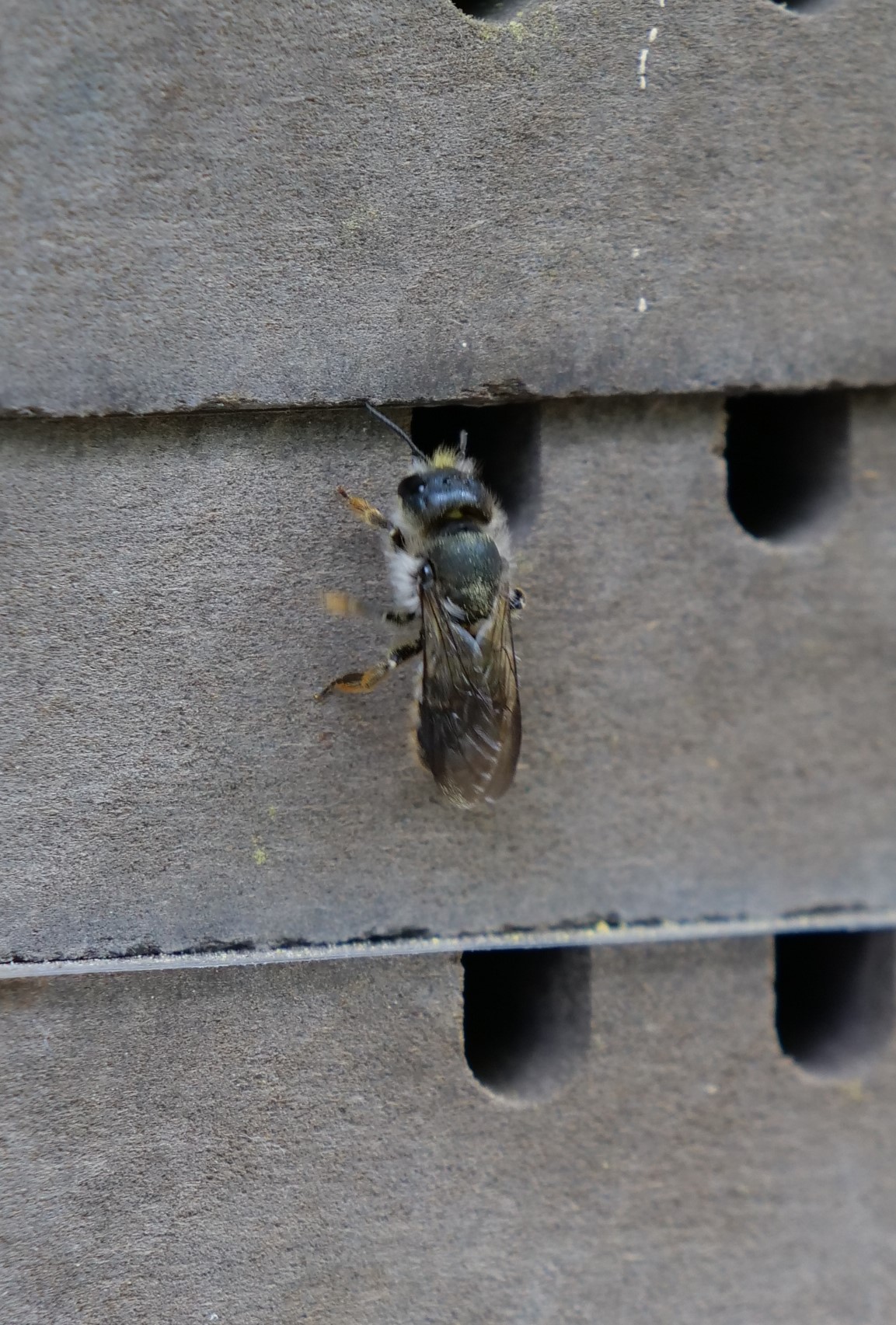 Osmia brevicornis (female) nesting. Credit: Julia Osterman
The policy stakes for this research are high. Andreas Gumbert of the European Commission's DG Environment outlined how the 2024 Nature Restoration Regulation now legally obliges EU member states to reverse pollinator decline by 2030, with standardised annual monitoring of wild bees, hoverflies, butterflies and moths set to come into force imminently. Yet there are still no defined Specific Protection Goals for wild pollinators - the quantitative safety thresholds that determine whether a pesticide use is acceptable. Without them, wild bees cannot be fully incorporated into the risk assessment process that governs pesticide approvals. Closing that gap, as Gumbert acknowledged, depends on exactly the kind of species-level data that research like Osterman's is beginning to provide.
Watch the full seminar.