A visit to the BeeLab: Behind the scenes with WildPosh's Turin partner
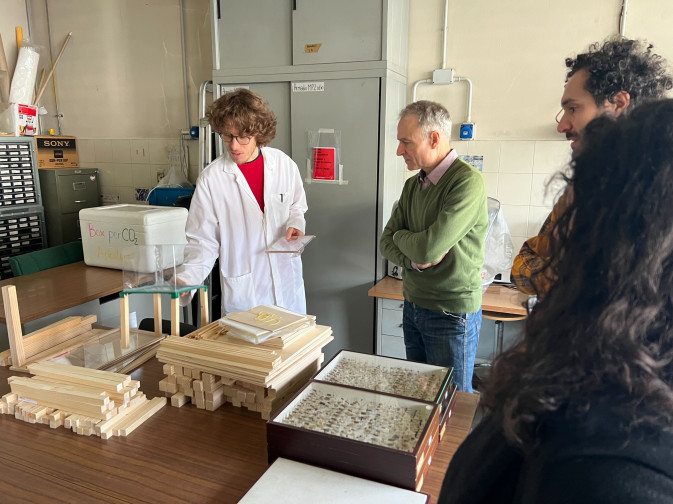
As part of the second WildPosh Annual General Meeting that took place in Turin, Italy, project partners from the University of Halle and members of the WildPosh communication team from Pensoft had the chance to step away from the meeting rooms and into the laboratory - getting a firsthand look at the work being carried out by the hosting partner, the University of Turin.
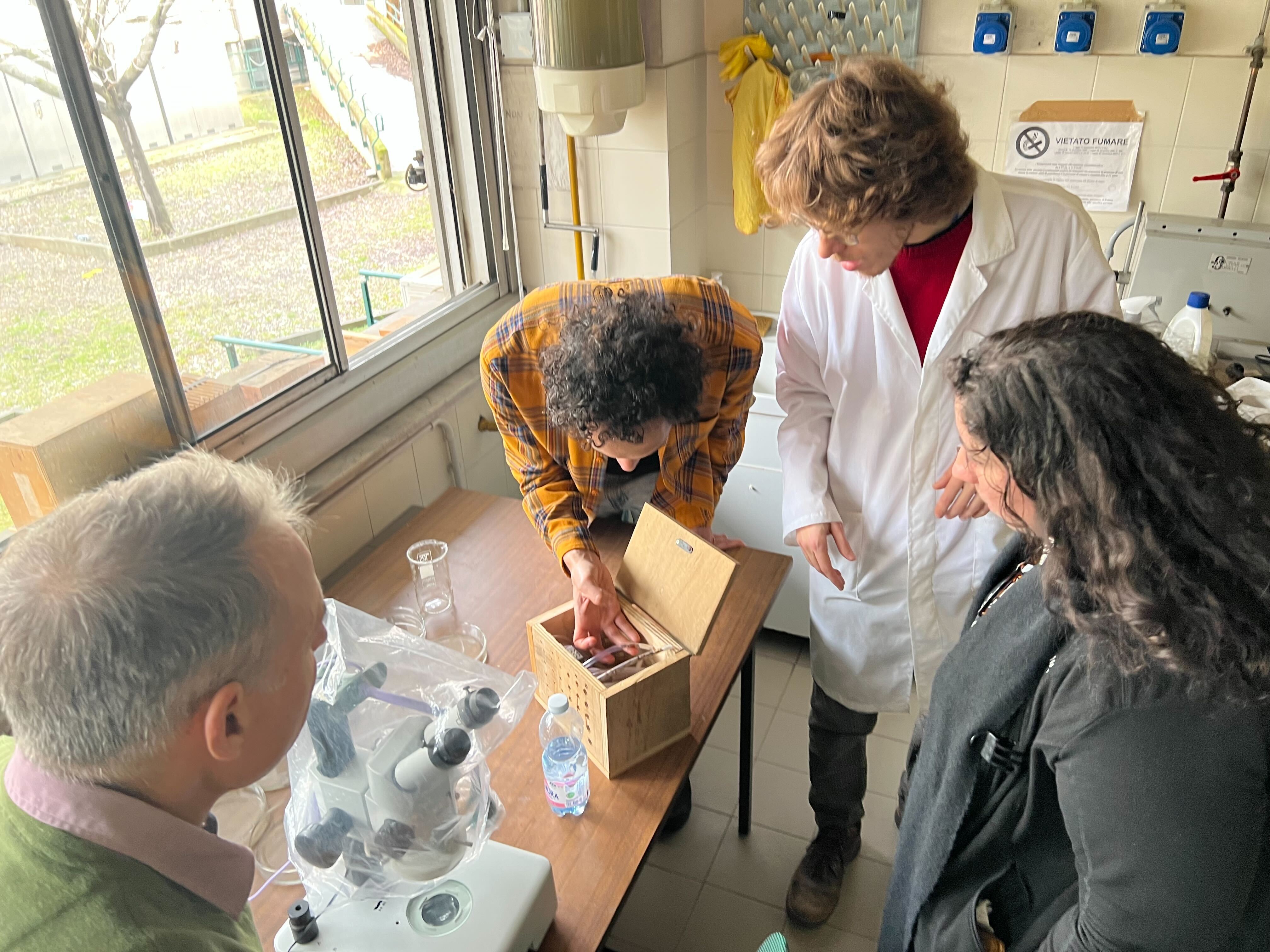
Led by Prof. Simone Tosi, the Bee Health and Behaviour Lab, known as the BeeLab, is based within the University of Turin's Department of Agricultural, Forest, and Food Sciences. The lab is dedicated to investigating the health and behaviour of a wide range of wild and managed pollinators, from the eusocial honey bee and bumble bee to solitary species. Its research centres on understanding how multiple stressors - including pesticides, nutrition, pathogens, and climate change - affect pollinators both individually and in combination.
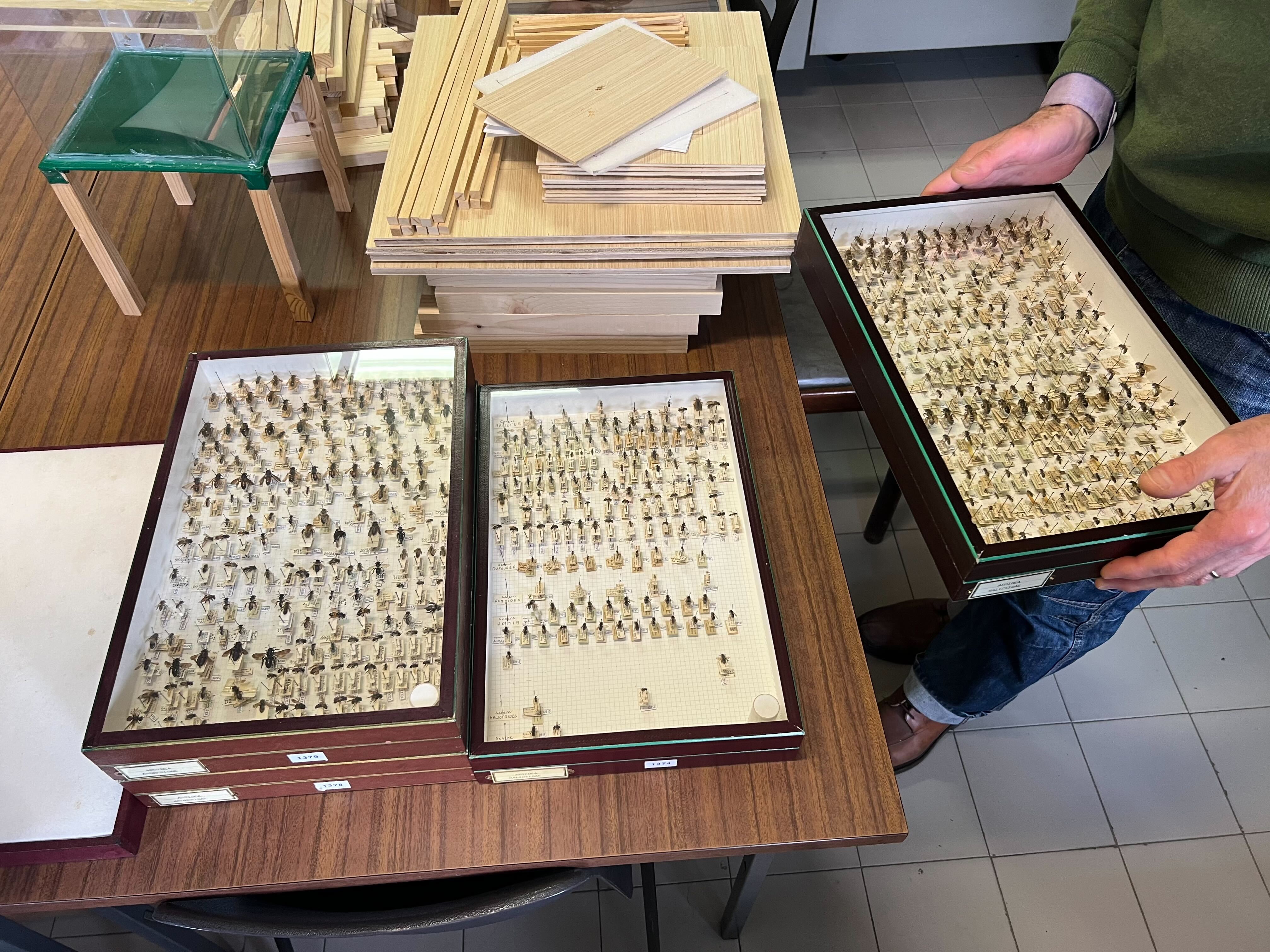 University of Turin's bee collection
The visit took in several areas of the facility, with lively discussions unfolding throughout. Knowledge flowed in both directions as the BeeLab team and colleagues from the University of Halle exchanged insights and experiences, with early-career scientists joining along the way to share their own expertise. Highlights included the darkroom used for rearing bumblebees and testing pollinator's cognition with labyrinths and arenas, as well as a look at bee specimens collected and identified during last season's fieldwork. The group also visited the BeeLab's experimental apiary, where researchers study bee behaviour, beekeeping, and pollination in a real-world setting. Here, bee health and colony productivity are monitored in relation to the environmental factors that shape them, offering insights into what drives bee behaviour in the field.
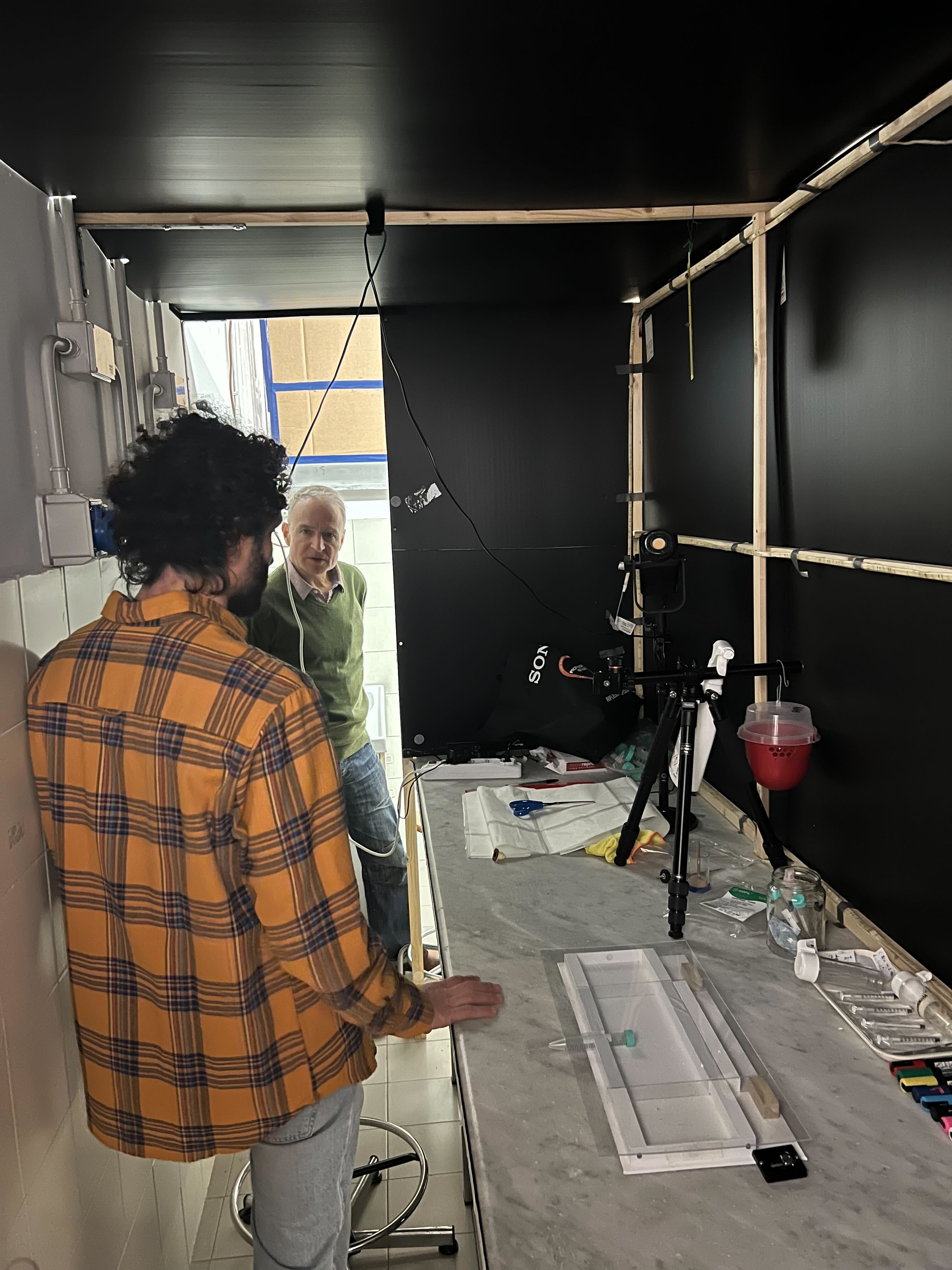 The dark room used for rearing bumblebees
The visit concluded with a discussion regarding a future collaboration, with the University of Halle planning to return in spring to develop new testing practices on wild pollinators, especially soil-nesting ones. The aim is to test how environmental stressors, such as pesticide exposure, can alter wild bee behaviour and survival.
The BeeLab's dedicated team, inclusive ethos, and wide-ranging expertise make it a natural home for the kind of innovative pollinator research that WildPosh depends on.
Follow BeeLab's work on their website and Instagram.