Behind the scenes of WildPosh field work
Our recent social media campaign, #WildPoshInTheField, took followers behind the scenes of fieldwork carried out last summer by researchers at the University of Murcia. The campaign aimed to show the daily reality of fieldwork, and the hands-on work our researchers put in during their trip.
Sampling across Albacete and Murcia
The fieldwork centered on sampling carried out around Albacete and Murcia last summer, as part of Work Package 1. Over the course of the campaign, the WildPosh team collected nectar, pollen, soil, pollinators, and more - each sample requiring its own specialist equipment and approach. Data sheets, tweezers, tubes, a portable centrifuge, a battery, and a thermometer all made their way into the field kit.
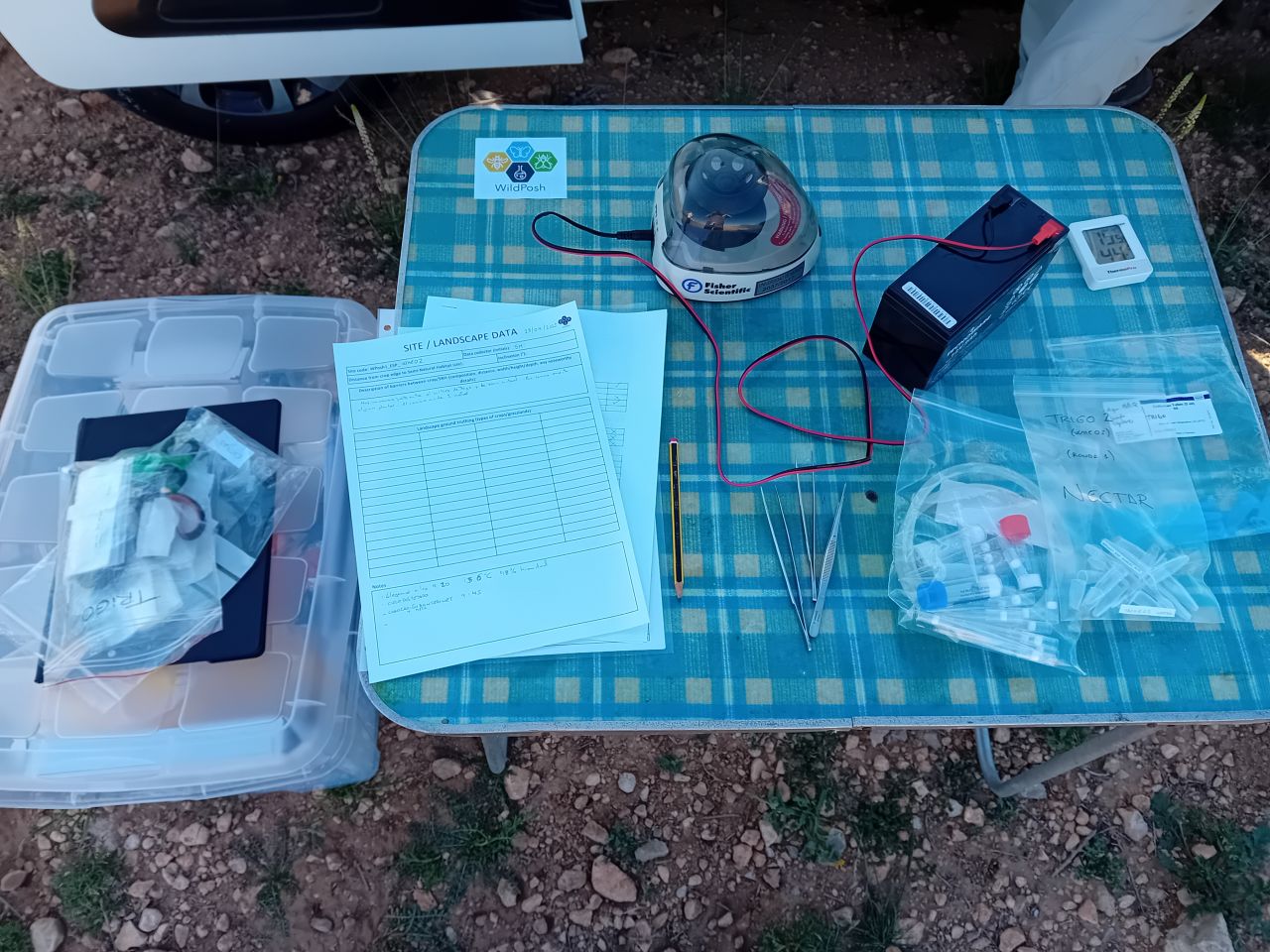 Sampling equipment
Nectar samples play a key role in the team's research: by analysing what's in the nectar collected from flowers, scientists can better understand what wild pollinators encounter in nature - and what they might be exposed to.
Bumblebees at work
At one site, researchers set up signs marking the entrance to a natural area bordering a wheat field, asking visitors to tread carefully - bumblebee nests were nearby. It didn't take long for the bumblebees to get to work, flying in and out to collect pollen from the surrounding flowers. Observations like these help the WildPosh team understand how wild pollinators actually use the landscapes around them.
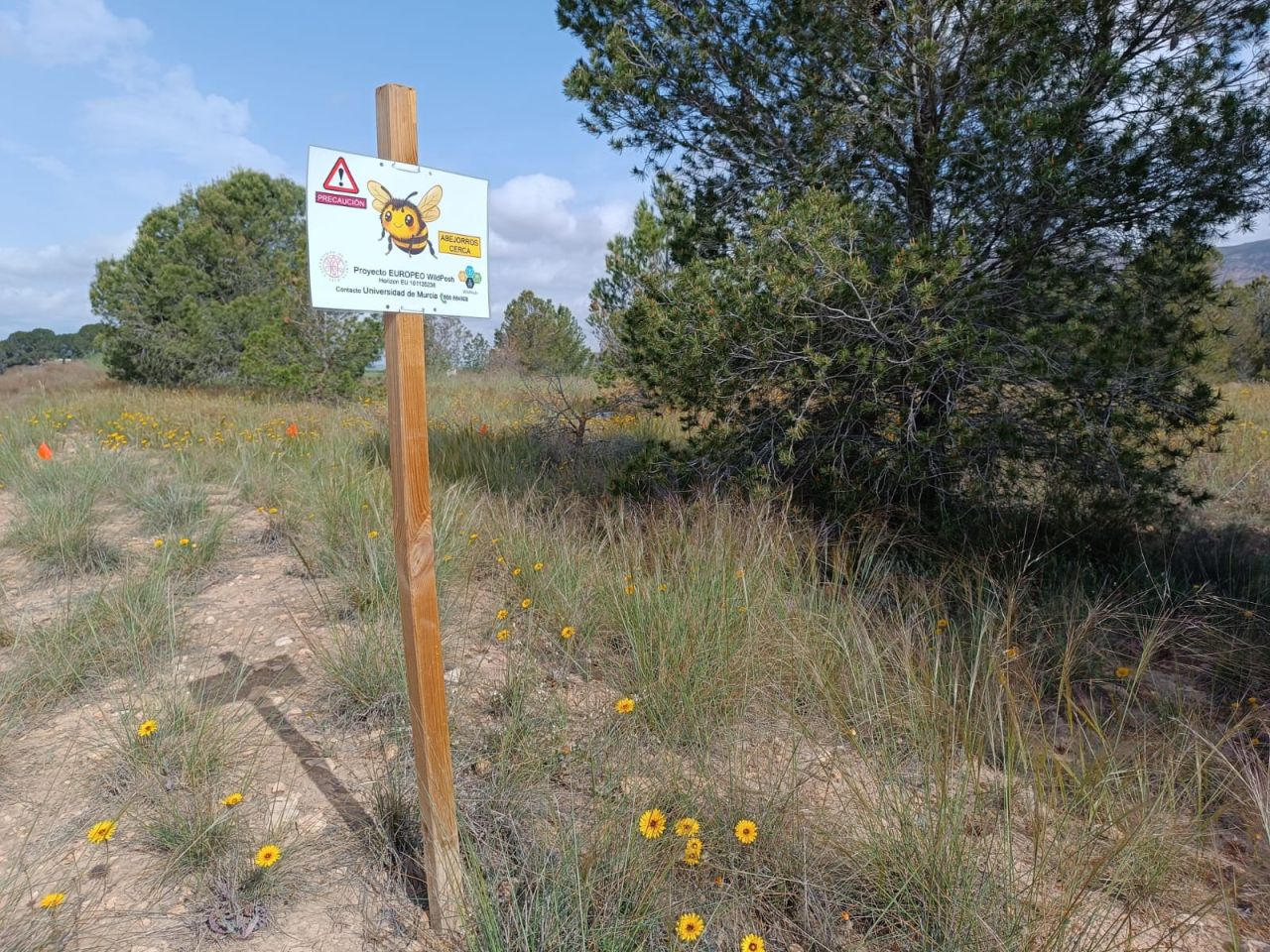
By the end of the sampling campaign, temperatures around Albacete and Murcia had climbed to 30°C - and the bumblebees felt it too. To keep their nests cool, they fanned their wings at the entrance.
Nectar and pollen in oilseed rape
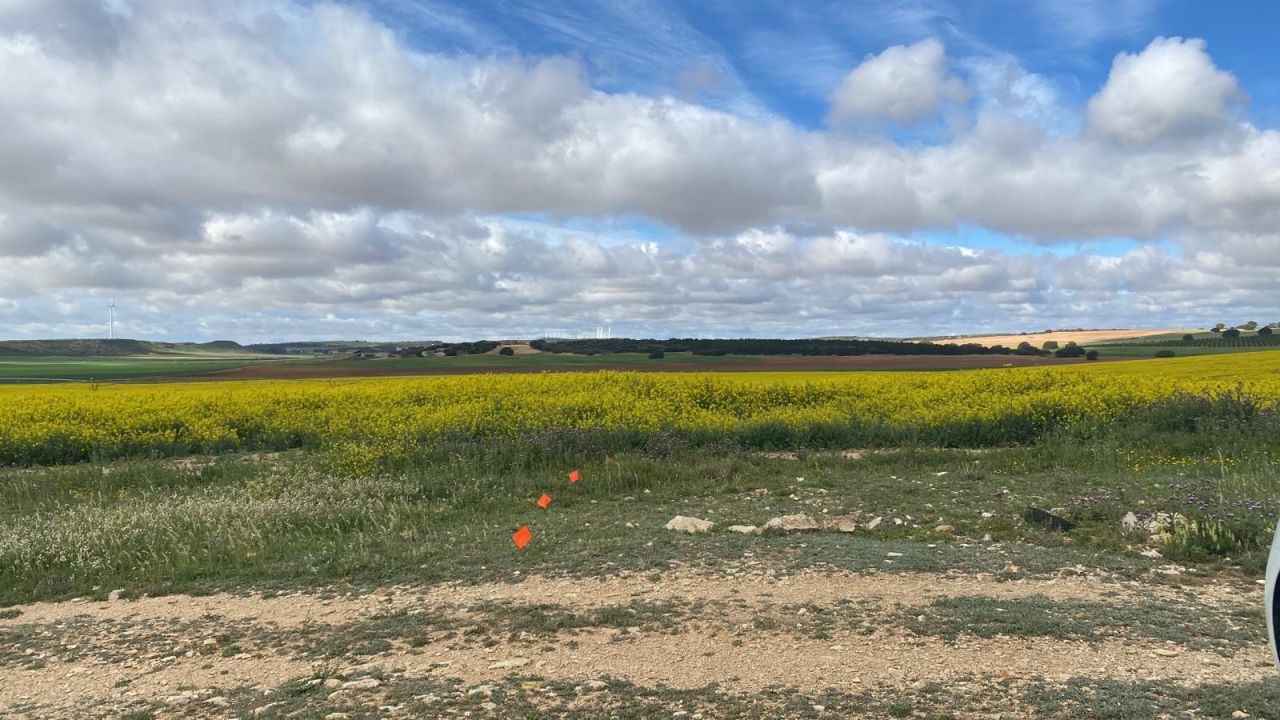
Another study site was a flowering oilseed rape field in Albacete, where red flags marked the distances from the crop at which nectar and pollen samples were collected. This site was central to the team's investigation into what wild pollinators encounter in and around agricultural land.
Want to meet the people behind the fieldwork? Get to know the early career researchers from the University of Murcia.