A harmonised pesticide-use database for Europe presented at EurBee
At EurBee 2026 (the 11th European Conference of Apidology), Lauréna Porcel (ANSES), a researcher with the WildPosh project, presented PestiTrack - an open database designed to track pesticide use across European agricultural landscapes.
Pollinators like bees are essential to agricultural production, yet agricultural intensification has increased chemical pressures on these species. A key obstacle to assessing this risk has been the fragmented, inconsistent nature of pesticide-use data across countries. PestiTrack addresses this gap by centralising and standardising data from national and European databases, farmer surveys, and regulatory records on authorised plant protection products.
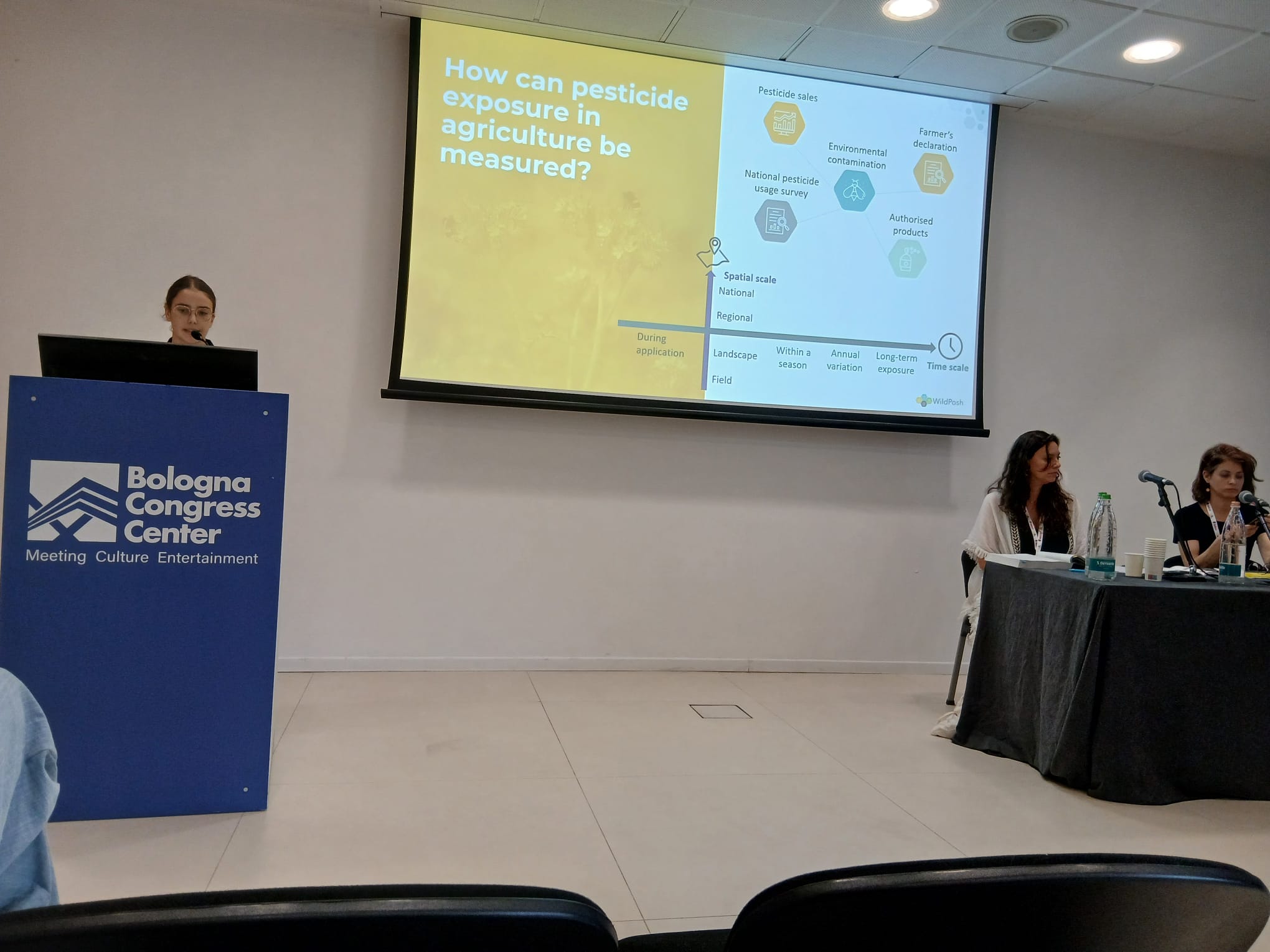
The WildPosh team focused on four countries in the project's site network - Estonia, Germany, the United Kingdom and Spain - examining pesticide use on oilseed rape and wheat, two crops with contrasting relevance to pollinators. Using automated text-mining and data-parsing methods, the team compiled detailed information on commercial formulations, application rates, timing and crop-specific practices.
Their 2025 findings revealed notable differences between countries: the UK authorised the most plant protection products for oilseed rape, while Germany led for wheat and showed a stronger reliance on fungicides compared to the herbicide-dominant profiles seen elsewhere.
By making this data openly accessible, PestiTrack lays the foundation for more realistic pesticide exposure assessments and better-informed policy decisions to protect pollinators.
Explore the EurBee book of abstracts.