Meet the researchers: Lauréna Porcel
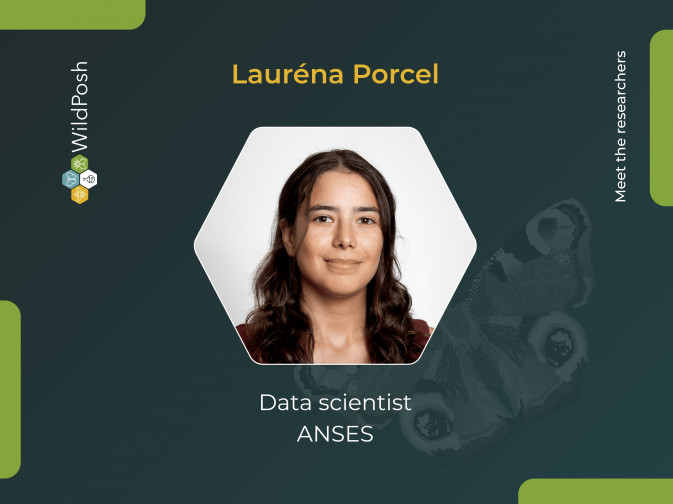
Each week, we introduce one of the early-career researchers behind the WildPosh project. Meet the young scientists working to understand and protect wild pollinators across Europe.
After graduating from the Engineering School at Université Paris Cité, Lauréna Porcel worked as a data scientist in a diagnostics company and taught math classes. She then completed a master's degree in ecology at the Université Grenoble Alpes to specialise in the field, before joining ANSES to work on the WildPosh project.
Question: What drew you to working with wild pollinators?
Lauréna Porcel: I graduated as an engineer with a strong interest in ecology and biodiversity. I wanted to apply my technical skills to a concrete environmental challenge, and wild pollinators, which are global indicators of ecosystem health, offered exactly that.
Q: What’s the most exciting part of your work in WildPosh?
LP: I appreciate working in an interdisciplinary team where everyone shares the same goal. It's motivating to see how data science can contribute to this topic.
Q: What’s one finding or moment from your research that stood out to you?
LP: The data is fragmented and heterogeneous. There are numerous projects related to pollinators, affecting many different areas and stakeholders.
Q: How do you hope your work in WildPosh will help protect pollinators in Europe?
LP: I won't be contributing directly to protecting pollinators, but the idea is to provide accessible data and tools that fill knowledge gaps and guide future decisions. I want to help make science more accessible to policymakers and the public through clear, easy-to-interpret visualisations.
Q: What’s something about pollinators you wish everyone knew?
LP: Bees aren't the only ones involved in pollination! There are hundreds of thousands of different species involved, spanning various groups (insects, birds, and more). The honeybee alone cannot be representative of all species.
We also interviewed another early-career researcher from ANSES. Read the interview with Tatiana Cardenas.