Meet the researchers: Alicia Kling
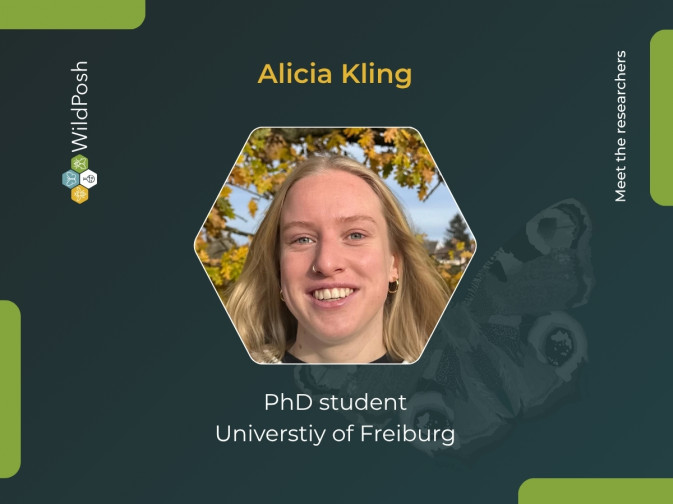
Each week, we introduce one of the early-career researchers behind the WildPosh project. Meet the young scientists working to understand and protect wild pollinators across Europe.
Alicia Kling studied Environmental Sciences at the University of Freiburg. She joined the WildPosh project in 2024 for her master’s thesis, and since January 2025, she has been continuing her research as a PhD student, conducting laboratory and mesocosm experiments with different pollinator species.
Question: What drew you to working with wild pollinators?
AK: During my master’s studies, I became fascinated with wild bees and their ecology. The more I learned about them, the more I realised how much there is still to discover. Pollinators are essential for biodiversity and food security, yet many questions about how environmental pressures affect them remain unanswered. This combination of ecological importance and open research questions motivated me to continue working with wild pollinators.
Q: What’s one finding or moment from your research that stood out to you?
AK: One of the most striking findings from our research is that some approved pesticides can have strong effects on wild bees even when they do not directly kill them. For example, substantial reductions in reproduction following pesticide exposure. These kinds of sublethal effects can have important consequences for bee populations, but are currently not captured in the EU pesticide approval process. For me, this really highlights why we need to look beyond mortality when assessing the risks pesticides pose to pollinators.
Q: How do you hope your work in WildPosh will help protect pollinators in Europe?
AK: I hope that our research can help close some of the gaps in our understanding of pesticide impacts on wild pollinators. By providing robust scientific evidence, we want to contribute to improving pesticide risk assessment and support policy decisions that better protect wild pollinators across Europe.
Q: What’s something about pollinators you wish everyone knew?
AK: When people hear the word “bee”, they often think of the honey bee. But honey bees are just one small part of an incredibly diverse world of wild pollinators. Europe alone is home to around 2,000 wild bee species, each with its own ecology and role in the ecosystem.
Learn more about some possible sublethal effects of pesticides on bumblebees.